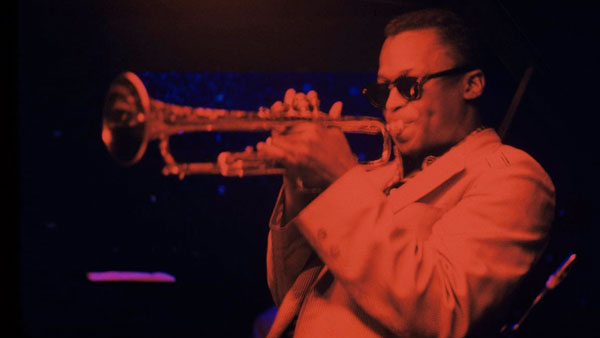
Miles Davis at 100: The story of jazz continues
spacer
By KJazz Intern Luis Castilla
photo credit: Miles Davis Photo Archives | Miles Davis Official Site
Miles Davis remains one of the most influential figures in jazz history more than 30 years after his death. As fans celebrate the centennial of his birth this month, his impact can still be heard through the musicians he mentored, the sounds he introduced, and the risks he took throughout his career.
Born in 1926 in Alton, Illinois and raised in East St. Louis, Davis grew up in a middle-class family where his father worked as a dentist. He began playing trumpet at a young age and was already performing professionally by 18. In 1944, Davis moved to New York City to attend Juilliard, though he spent much of his time in Harlem clubs listening to musicians such as Charlie Parker and Dizzy Gillespie.
Davis entered jazz during the rise of bebop, but quickly stood apart from other trumpet players. While many musicians focused on speed and technical skill, Davis focused on tone and phrasing. His style became central to the cool jazz movement of the late 1940’s.
That sound was showcased on Birth of the Cool, a series of recordings still considered some of the most influential in jazz history. Davis showed that jazz could sound relaxed and melodic while keeping its complexity.
Davis continued to evolve throughout the ‘50s. He formed groups featuring future stars such as John Coltrane, Julian Edwin "Cannonball" Adderley and Bill Evans. In 1959, he released Kind of Blue, widely regarded as one of the greatest jazz albums ever recorded. More than 60 years later, musicians across genres still study the album.
Davis valued individuality as much as technical ability. In Miles: The Autobiography, he wrote, “For me, music and life are all about style.” That idea shaped his career. Whenever audiences became comfortable with one sound, Davis moved toward another.
In the late ‘60s and early ‘70s, he began mixing jazz with rock, funk and electronic instruments. Albums such as In a Silent Way and Bitches Brew helped launch jazz fusion and introduced jazz to younger audiences. Although some traditional fans rejected the shift, Davis ignored criticism and kept experimenting.
His influence extended beyond his own recordings. Many musicians who played in his bands later became major artists themselves, including Herbie Hancock, Wayne Shorter, Chick Corea, and Tony Williams. Davis encouraged musicians to take risks and develop their own styles instead of copying others.
Despite his success, Davis faced serious personal struggles. During the ‘50s, he battled heroin addiction while trying to establish himself as a bandleader. In his autobiography, he described isolating himself at his father’s farm in Illinois to quit drugs without medical treatment. He also dealt with chronic pain and physical exhaustion throughout his life.
At the same time, Davis regularly experienced racism despite his fame. Police officers stopped him outside clubs where he performed, and critics and promoters often treated Black musicians unfairly. Those experiences shaped his worldview and contributed to the anger he sometimes expressed publicly.
Even in the ‘80s, when many artists from his generation relied on nostalgia, Davis continued experimenting with pop, funk and hip-hop influences. He refused to repeat past successes. As he wrote in his autobiography, “If anybody wants to keep creating they have to be about change.”
A century after his birth, Davis remains one of jazz’s defining figures because he never allowed the music to stand still.